
Find Records in The Villages
The Villages public records are managed primarily by Sumter County, since The Villages is a census-designated place that spans parts of Sumter, Lake, and Marion counties. The majority of the community lies in Sumter County, which means the Sumter County Clerk of Courts handles most court records and official recorded documents for residents. Florida's Chapter 119 entitles anyone to request public records from any of these county agencies without giving a reason or identification.
The Villages Quick Facts
Sumter County Clerk of Courts
The Sumter County Clerk of Courts is the primary office for court records and official recorded documents for The Villages. Because the bulk of The Villages community is in Sumter County, this Clerk's office handles the most relevant filings for residents. The Clerk's website is at sumterclerk.com. This office processes civil case filings, criminal case records, family court documents, probate filings, and the official records series for deeds, mortgages, and liens recorded in Sumter County.
The 5th Judicial Circuit covers Citrus, Hernando, Lake, Marion, and Sumter counties. Circuit court handles major civil and criminal matters, family law cases, and probate. County court handles misdemeanor criminal cases and smaller civil disputes. Both levels are served by the Sumter County Clerk. If a case was filed for a Villages resident, the Sumter Clerk is the first place to look.
Multi-County Considerations
The Villages spans county lines, which means some residents may have records in Lake or Marion counties depending on where their address falls. Lake County has its own Clerk of Courts, and Marion County has a separate Clerk as well. If you are not sure which county a particular address is in, checking a county map or contacting the community's management directly can help clarify which Clerk's office to contact.
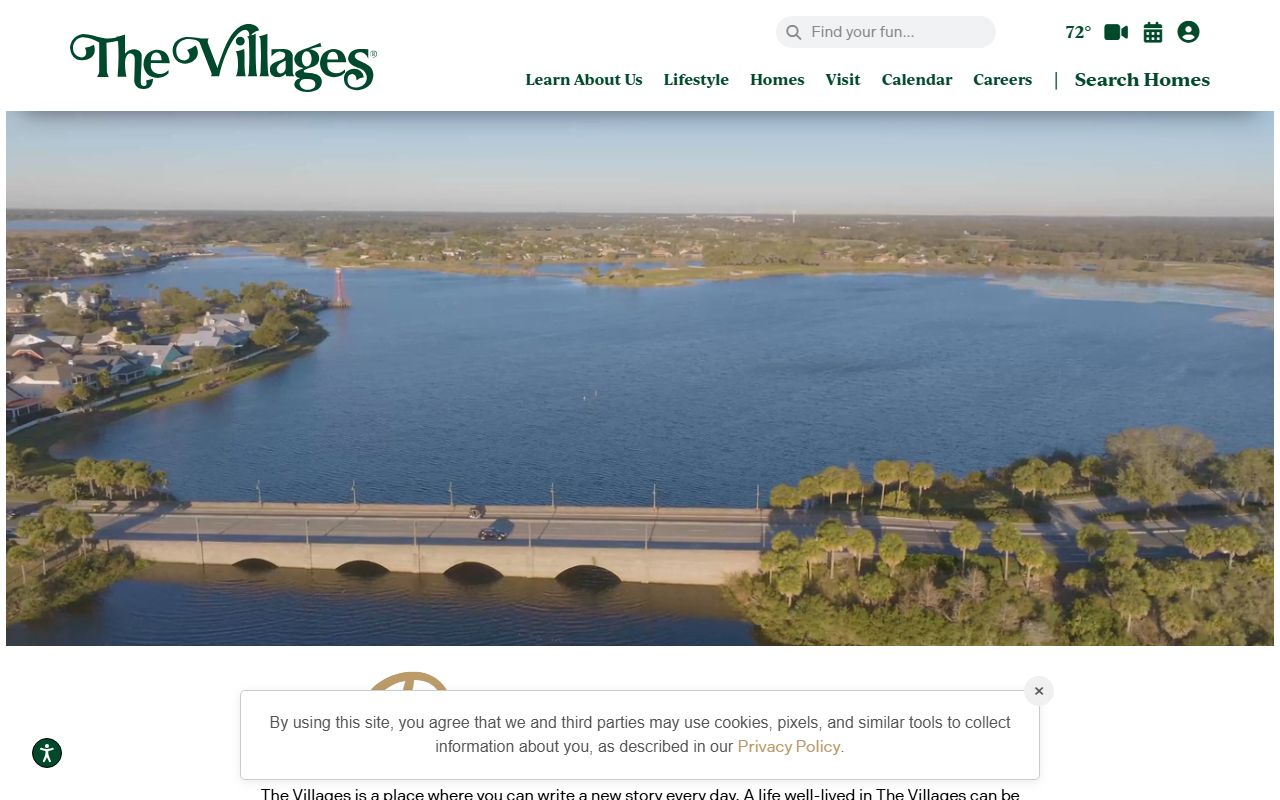
The image below shows The Villages community website, which provides general information about the development and can help you identify which county a specific area falls within.
For court records specifically, you may need to check two or three county clerk portals if you are unsure which county's court system handled a particular case.
How to Request Records
To request records from the Sumter County Clerk, you can contact the office directly at sumterclerk.com. Requests can be made in person, by phone, by mail, or through any online portal available. No form is required. You describe what you need and give enough detail for the office to find it. A case number, a party name, or a date range all help narrow the search.
Fees under Florida law are $0.15 per page for standard copies. If the search and review of records takes more than 30 minutes of staff time, the agency may charge for that time at the rate of the lowest-paid employee who can handle the task. The first 30 minutes are always free. Certified copies carry an additional fee on top of the per-page charge.
If a request is denied, the agency must give you a written explanation citing a specific legal exemption. Common exemptions under Section 119.071 cover active law enforcement investigation records, certain medical or personnel files, and personal identification details like Social Security numbers. The Florida Attorney General's office runs a free mediation program at (850) 245-0140 for disputes about denied or delayed records requests.
Property and Official Records
Property records for The Villages are split across counties just like the community itself. Deeds, mortgages, liens, and other recorded instruments are filed in the county where the property is located, whether that is Sumter, Lake, or Marion. The Sumter County Clerk's official records index is your starting point for Sumter County properties. Searching by grantor or grantee name or by property description are both common ways to find recorded documents.
Each county also has its own Property Appraiser who manages ownership data and assessed values. For Sumter County properties in The Villages, the Sumter County Property Appraiser holds that data. If you are not sure which county a specific parcel falls in, the Property Appraiser's office can often help clarify.
Types of Records Available
Residents of The Villages can access a range of public records through the relevant county offices. Court case records, including civil lawsuits, criminal cases, family law matters, and probate, are at the appropriate county Clerk's office. Official recorded documents for real property are also at the Clerk. Law enforcement records for The Villages area may be held by the Sumter County Sheriff's Office or, depending on the location, by county sheriff offices in Lake or Marion counties. Tax and property assessment records are at the respective county Property Appraiser.
The Florida Association of Court Clerks maintains a statewide directory at flclerks.com. This directory is useful for finding the right Clerk's office in Sumter, Lake, or Marion counties.
Florida Public Records Rights
Florida Chapter 119 is one of the broadest open records statutes in the country. It covers all government agencies and all record formats, including email, audio, and digital files. The full text of the law is at the Florida Legislature's statutes site. The law applies to all counties where The Villages community lies, meaning residents can request records from Sumter, Lake, or Marion county agencies under the same rights and procedures.
The Florida Attorney General's office provides open government guidance and mediation services at myfloridalegal.com/open-government. The First Amendment Foundation at floridafaf.org is another resource for residents who run into access problems. Florida's Department of Law Enforcement at fdle.state.fl.us handles state-level criminal history records that may supplement what you find at the county Clerk level.
Nearby Cities
These nearby cities also have public records pages with details on local courts and record access options.
Sumter County Records
Court records and official records for The Villages are primarily maintained by the Sumter County Clerk of Court.