
Florida Public Records
Florida public records cover a wide range of documents held by government agencies across the state. Under Florida law, most of these records are open to any person who wants to see them. You can search public records from county clerks, state agencies, law enforcement offices, and local government bodies throughout Florida. This guide helps you find the right office, understand the process, and get the documents you need.
Florida Public Records Quick Facts
Florida Public Records Law
Florida is widely recognized as having one of the strongest public records laws in the country. The right of access is not just a statute. It is rooted in Chapter 119, Florida Statutes and in Article I, Section 24 of the Florida Constitution. Together, these establish a clear presumption that all government records are open to the public unless a specific exemption applies.
Under Section 119.01, F.S., it is the policy of this state that all state, county, and municipal records are open for personal inspection and copying by any person. This language is direct. It puts the burden on the government agency to justify withholding records, not on the person requesting them. Florida agencies must provide access and cannot ask you why you want the records or who you are.
The law defines public records broadly. Section 119.011(12), F.S. says public records means "all documents, papers, letters, maps, books, tapes, photographs, films, sound recordings, data processing software, or other material, regardless of the physical form, characteristics, or means of transmission, made or received pursuant to law or ordinance or in connection with the transaction of official business by any agency." This includes electronic records. Emails, text messages, and databases can all be public records in Florida.
When an agency denies a request, it must cite the specific statutory authority for that denial. You have the right to ask for a written statement of the basis under Section 119.07, F.S. If you believe a denial is wrong, the Florida Attorney General's Mediation Program at (850) 245-0140 can help resolve the dispute without going to court.
The Florida Legislature posts Chapter 119 in full at leg.state.fl.us, where you can read each section and see the full list of exemptions that apply to specific record types.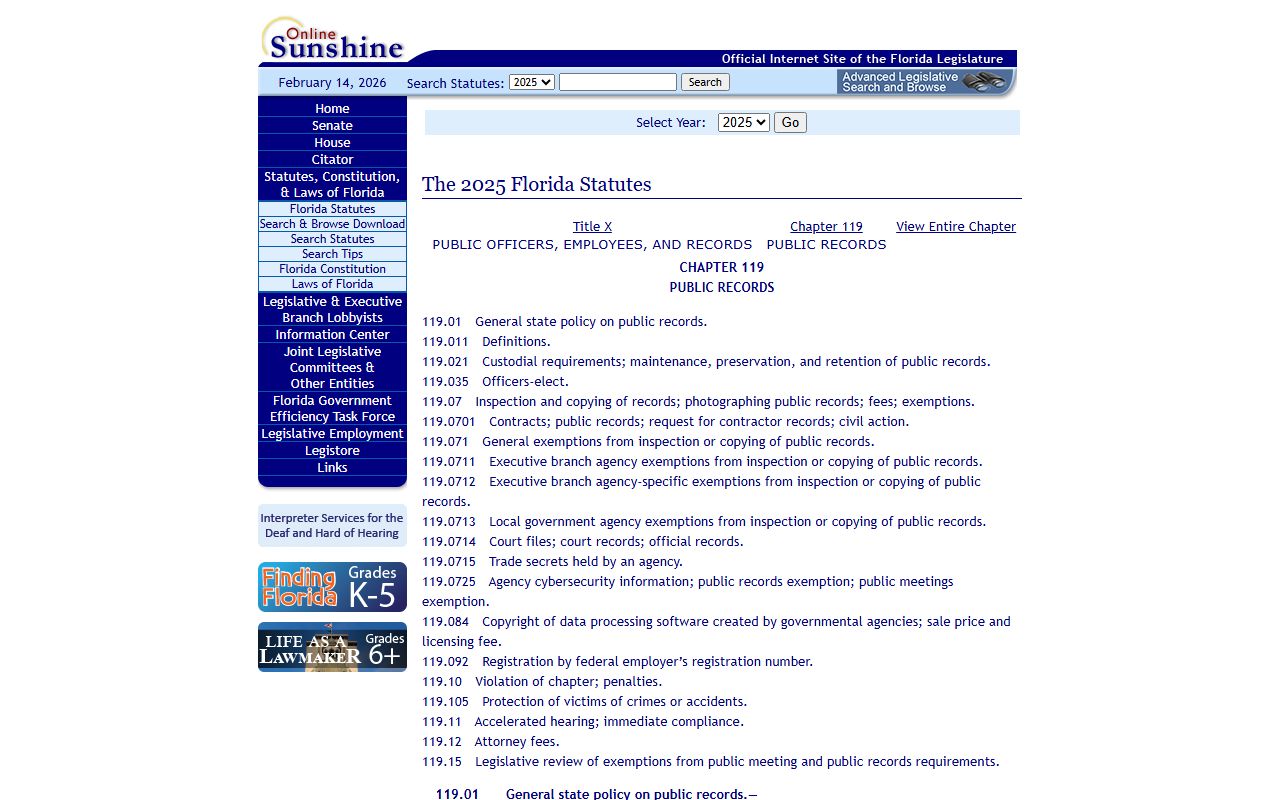
Florida courts have consistently upheld broad public access to records. Agencies cannot charge extra fees just because a request is large. They also cannot delay responses without a valid reason. Section 119.07 requires that every person who has custody of a public record must permit it to be inspected and copied at any reasonable time.
How to Request Florida Public Records
Making a public records request in Florida is simple. You do not have to put it in writing. You do not have to give your name. You do not have to explain why you want the records. These rights come from the Florida Constitution and Chapter 119. Walk up to the counter, call the office, send an email, or mail a letter. All of these work.
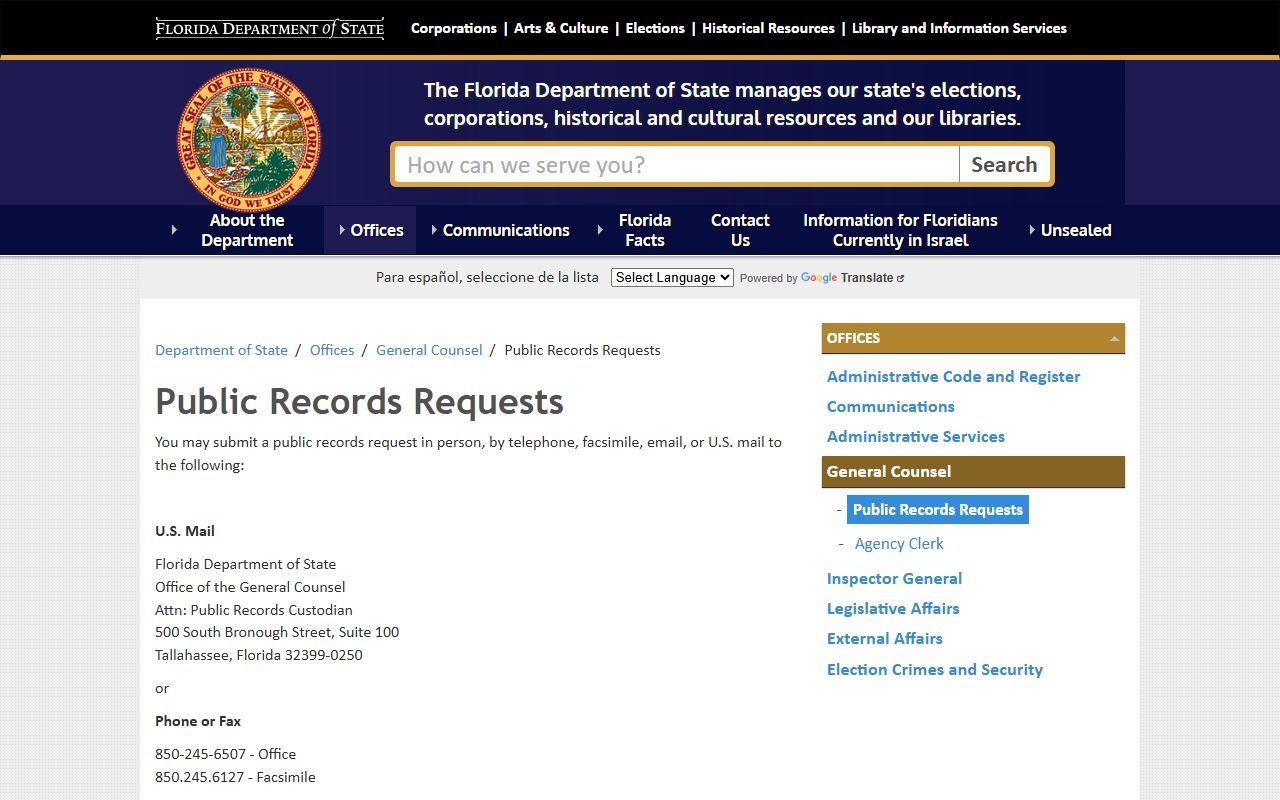
Most state agencies accept requests by phone, in person, fax, email, or U.S. mail. The Florida Department of State accepts requests at PublicRecords@DOS.fl.gov or by phone at (850) 245-6507. Their address is 500 South Bronough Street, Suite 100, Tallahassee, Florida 32399-0250. Keep in mind that under Florida law, your email address becomes a public record when you send an email to a government agency. If you want to keep your contact information private, call or write by mail instead.
You have the right to ask for a cost estimate before the agency produces records. This helps you plan for fees and decide how to narrow your request if needed. Agencies must acknowledge requests promptly and respond in good faith. They cannot simply ignore a request or delay without reason.
Note: Agencies must not dispose of records that have been requested for at least 30 days after the request is made, even if the record is otherwise scheduled for destruction.
Florida Attorney General Open Government
The Florida Attorney General runs the Open Government Mediation Program, which is a key resource for anyone who has trouble getting public records. The AG's office says: "Florida is proud to lead the nation in providing public access to government meetings and records." The program helps resolve disputes when an agency refuses to provide records or charges unreasonable fees. You can reach the mediation program at (850) 245-0140. Both parties must agree to take part in mediation.
The AG's open government page at myfloridalegal.com has guides, FAQs, and the full text of the Government-in-the-Sunshine Manual. This manual is published each year in cooperation with the Attorney General's Office and the First Amendment Foundation. It covers both open meetings and public records law in Florida.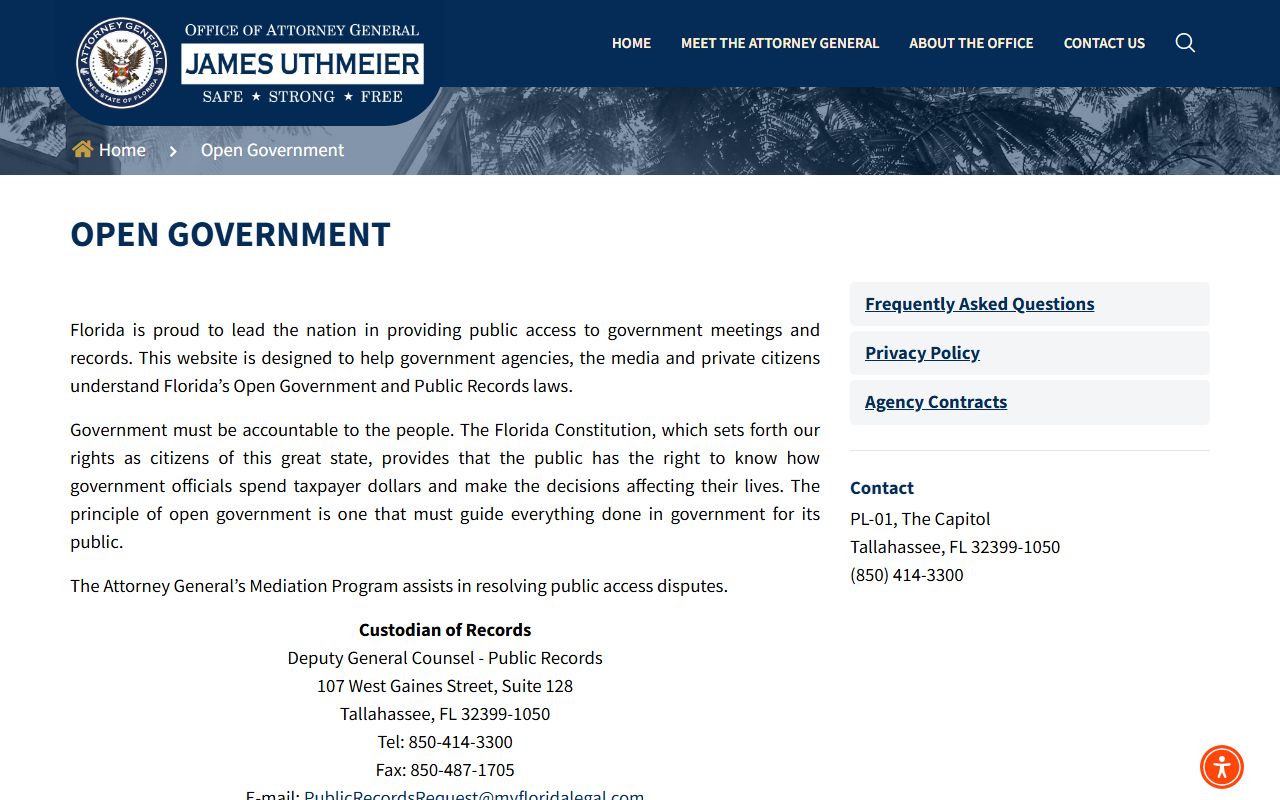
The AG's office also answers common questions about Florida public records law. You do not need to show ID. You do not need to give a reason. You can ask for records in any medium the agency maintains them in. If you need help, the AG's public records email is PublicRecordsRequest@myfloridalegal.com. You can also call (850) 414-3300 or write to 107 West Gaines Street, Suite 128, Tallahassee, FL 32399-1050.
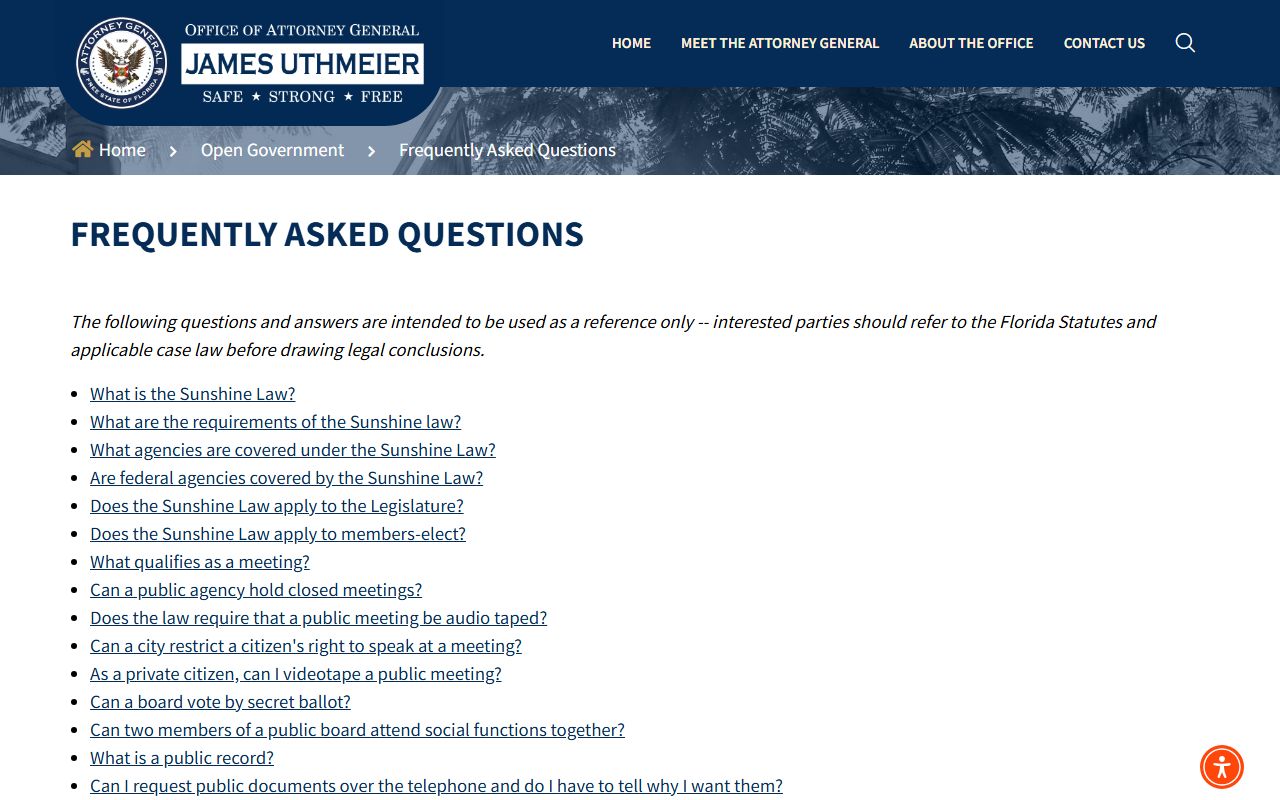
The AG's FAQ page covers what happens if your request is denied, how to get a cost estimate, and what types of records are exempt. These are practical answers to real questions people have when trying to access Florida public records.
State Agencies and Public Records
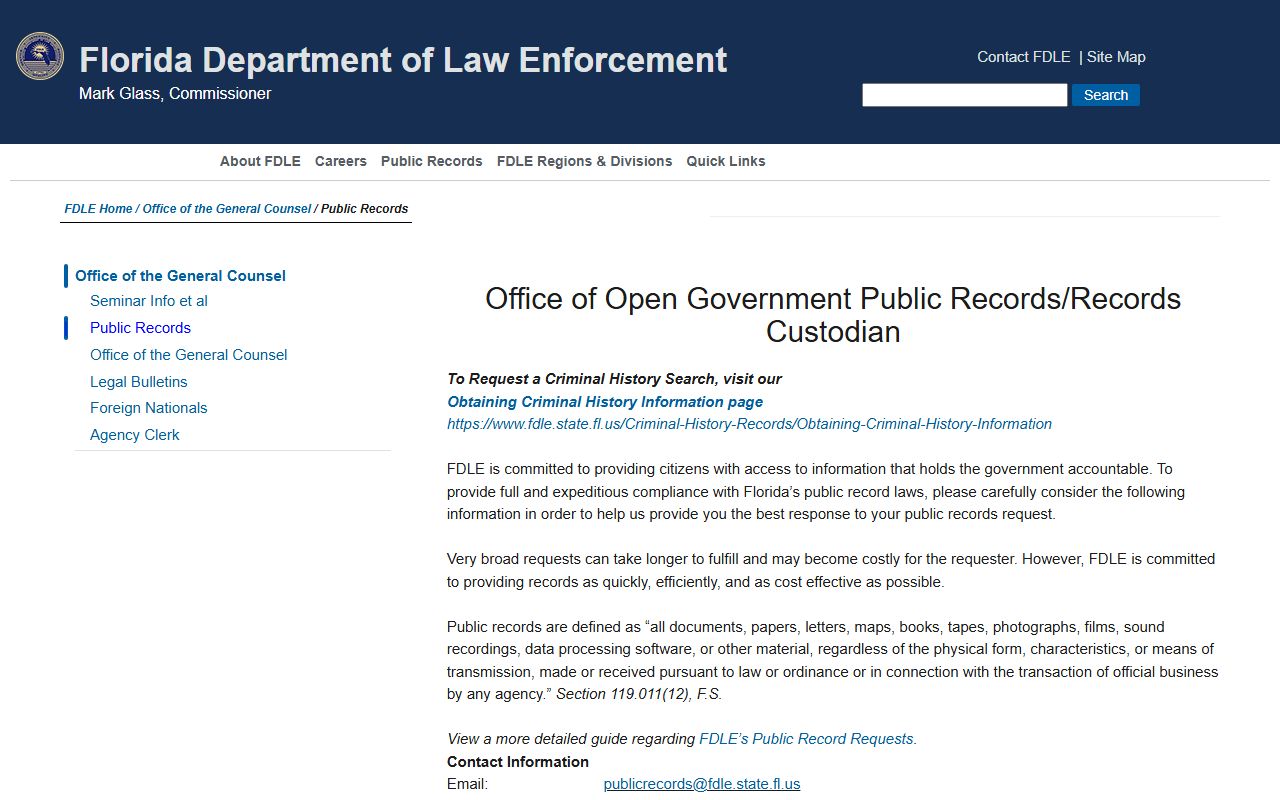
Many Florida state agencies maintain their own public records. Each agency has a designated custodian of records who handles requests. The Florida Department of Law Enforcement (FDLE) is one example. The FDLE Office of Open Government accepts requests by email at publicrecords@fdle.state.fl.us or by phone at (850) 410-7676. You can also visit in person at an FDLE office in Florida.
The Florida Department of State manages elections, corporations, historical and cultural resources, and state libraries. Their records span a wide range of subject areas. The Division of Library and Information Services runs Florida's Records Management Program, which helps local and state agencies maintain proper records. Under Chapter 257, Florida Statutes, the division has authority over records management functions statewide. You can find more at dos.fl.gov/library-archives/records-management/.
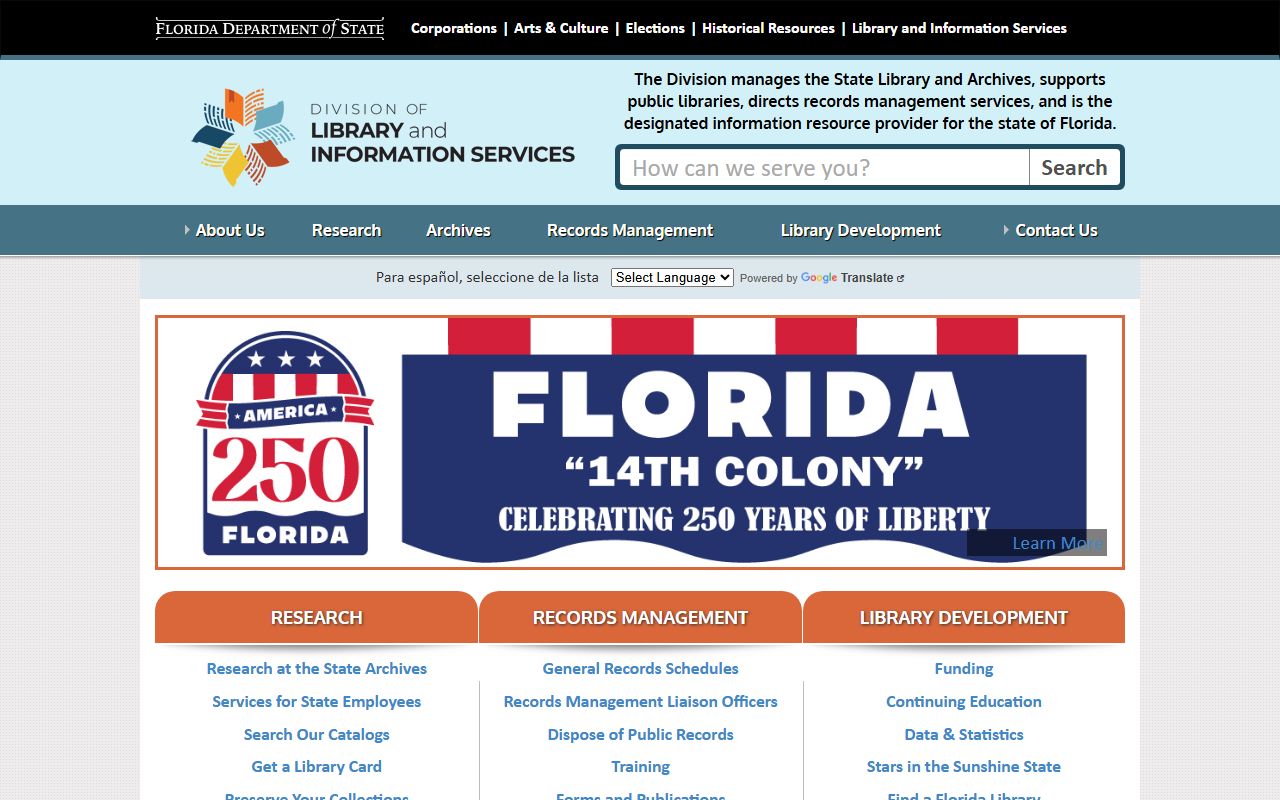
The State Library and Archives of Florida also holds historical records at dos.fl.gov/library-archives/archives/research/. If you need records from state agencies, start with the agency's website to find their public records custodian. The Florida Court Clerks and Comptrollers Association maintains a directory of all county clerks at flclerks.com. Each county clerk handles court records, official records, and more.
Florida Public Records Copy Fees
Fees for Florida public records copies are set by law. Basic copy fees are low. The standard rate is up to 15 cents per one-sided copy of a document no larger than 14 by 8.5 inches. Two-sided copies cost no more than an additional 5 cents per page. These rates apply to administrative records held by state agencies under the Records Management Program.
Other media types have their own fees. A CD-ROM copy costs $0.85. A DVD copy costs $1.15. Certified copies cost $1 per page plus $5 for the certification statement itself. County clerks may set their own fees for court records and official records, which can differ from state agency rates. The Alachua County Clerk, for example, charges $1 per page for court and official records versus $0.15 for administrative records.
When a request requires a lot of staff time, agencies may charge for that time. The first 30 minutes of research time is generally not charged. After 30 minutes, agencies can bill at the hourly rate for the staff member handling the request. You can always ask for a cost estimate upfront. If the fee seems too high, you can narrow your request to reduce the work involved. Section 119.07, F.S. governs how fees are set and what agencies can charge.
Note: If you only want to inspect records without getting copies, most agencies cannot charge you just to look at documents.
Open Government Resources in Florida
The Government-in-the-Sunshine Manual is the most complete guide to Florida's open government laws. It is published each year by the First Amendment Foundation in cooperation with the Attorney General's Office. The manual covers public records, open meetings, and recent case law. Public officials, journalists, and citizens all use it. You can access it at myfloridalegal.com/open-government/sunshine-manual.
The First Amendment Foundation is a non-profit group based in Tallahassee that works to protect open government in Florida. They run a hotline at (850) 222-3518 and a toll-free line at 1-800-337-3518. Their email is info@floridafaf.org and their address is 317 East Park Avenue, Lower Level, Tallahassee, Florida 32301. They offer training for local officials and can help members of the public who have trouble getting records. Their website at floridafaf.org has the Pocket Guide to Open Government and other resources.
The Florida Court Clerks and Comptrollers Association represents all 67 county clerks. They promote transparency and open government across Florida, especially during Sunshine Week each March. Their directory at flclerks.com/page/publicrecords links to each county clerk's public records process and search tools. The statewide records portal at myfloridacounty.com connects to county-level court records across Florida.
Types of Florida Public Records
Florida public records come in many forms. Court records are among the most commonly searched. These include civil filings, criminal case records, family law cases, probate records, and traffic citations. County clerks maintain court records and most offer online case search tools. You can also find official records such as property deeds, mortgages, liens, tax deeds, and marriage licenses at county clerk offices.
State agencies generate records that cover elections, business filings, environmental permits, and more. The Florida Department of State's SunBiz database at dos.fl.gov/sunbiz/ lets you search corporation and business records for free. The Department of Elections maintains voter registration files and election results. Agency correspondence, contracts, invoices, and reports are all public records under Chapter 119 unless a specific exemption applies.
Law enforcement records, arrest reports, and incident reports are generally public in Florida. The FDLE maintains criminal history information and accepts public records requests. Some records involving ongoing investigations, juvenile offenders, or certain personal details may be exempt. Section 119.071, F.S. lists the general categories of exempt records. When in doubt, ask the agency what records they have and whether any exemptions apply to your specific request.
Browse Florida Public Records by County
Each of Florida's 67 counties has a Clerk of Court who maintains court records, official records, and other public documents. Pick a county to find local contact details, search portals, and records access options.
Florida Public Records in Major Cities
Residents of Florida's major cities access public records through their county clerk and city government offices. Pick a city to find local resources for public records in that area.